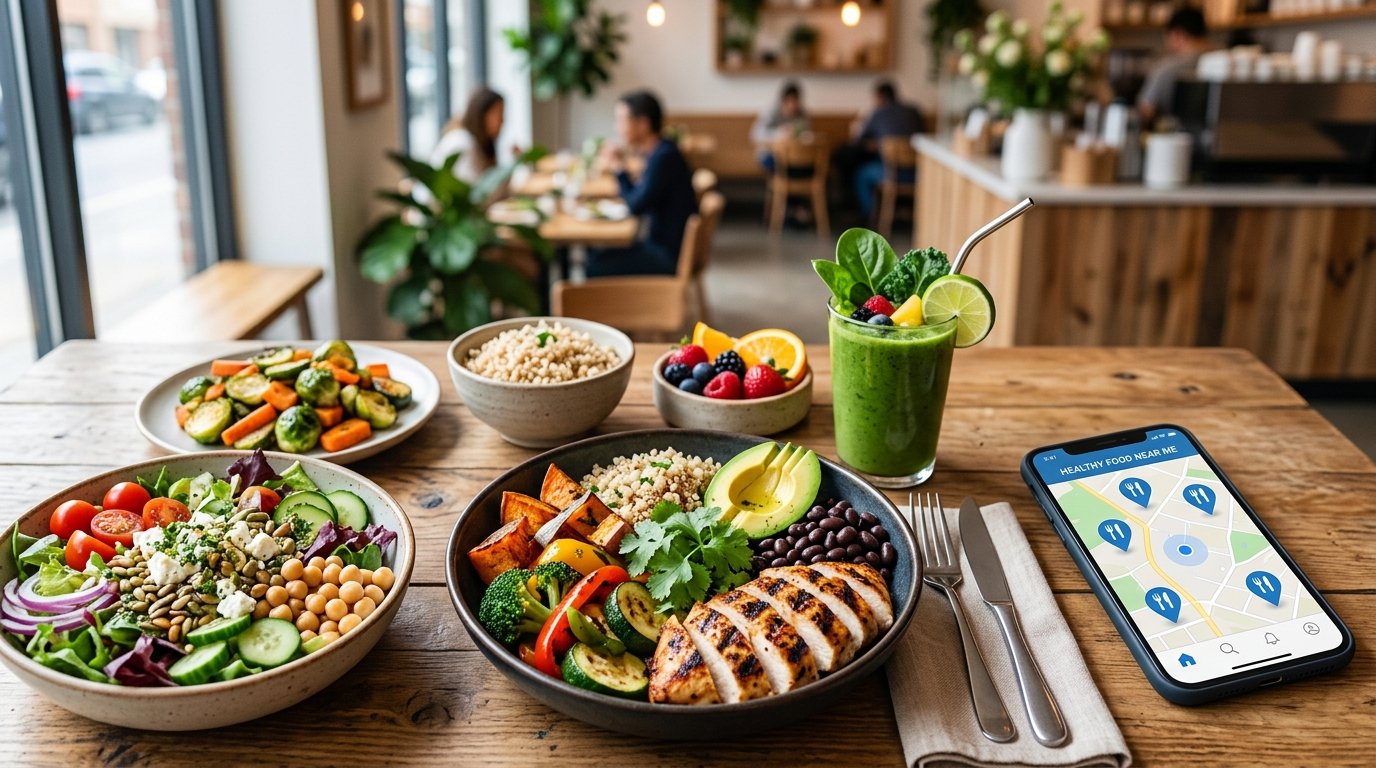
Finding a nutritious meal nearby should be simple. Yet restaurant menus can make almost anything sound healthy. A salad may arrive covered in creamy dressing, a smoothie may contain several servings of added sugar, and a “protein bowl” can be overloaded with salty sauces.
The solution is not to search for a perfect restaurant. It is to identify a balanced meal that suits your needs, budget, appetite, and location.
When searching for healthy food near me, look beyond labels such as “fresh,” “skinny,” “natural,” or “fit.” Check the ingredients, cooking method, portion size, available substitutions, and nutritional information. Those details tell you far more than the name of the dish.
What Counts as Healthy Food?
Healthy food does not belong to one cuisine or diet. A nutritious meal can be Pakistani, Mediterranean, Mexican, Japanese, Middle Eastern, vegetarian, or something as simple as grilled chicken with rice and vegetables.
The World Health Organization recommends eating a varied diet built around fruits, vegetables, pulses, whole grains, nuts, seeds, and suitable protein sources while limiting excess salt, free sugars, saturated fat, and industrially produced trans fat. Variety matters because different food groups supply different nutrients.
A balanced restaurant meal will generally include:
- A useful source of protein
- Vegetables or fruit
- A fibre-rich carbohydrate
- A reasonable amount of unsaturated fat
- Limited added sugar and excessive salt
- A portion that matches your hunger
You do not need to achieve perfect nutritional balance at every sitting. The NHS Eatwell Guide recommends aiming for an appropriate balance across a day or even a week rather than judging your entire diet by one meal.
The Quickest Way to Choose a Balanced Meal
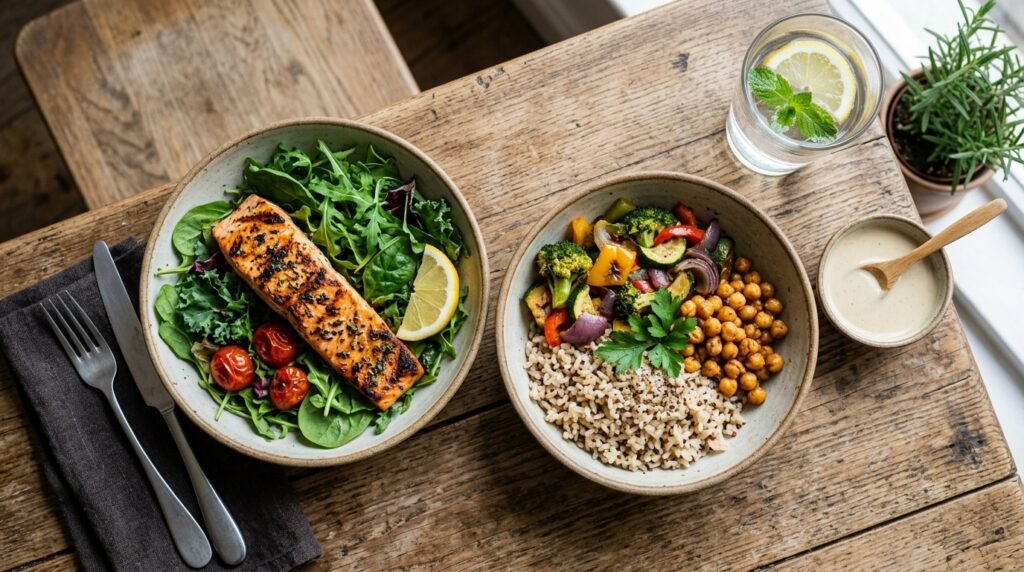
Use a simple plate check before placing your order.
| Meal component | Good options to look for | Items to watch |
|---|---|---|
| Vegetables | Salad, roasted vegetables, mixed greens, vegetable soup | Heavy butter, cheese sauce or deep-fried coatings |
| Protein | Beans, lentils, fish, eggs, tofu, grilled chicken | Processed meats and heavily battered proteins |
| Carbohydrates | Brown rice, wholegrain bread, oats, potatoes, corn | Oversized portions of refined bread, fries or sugary cereal |
| Sauces | Salsa, yogurt dressing, herbs, lemon, broth | Creamy, sugary or very salty sauces |
| Drinks | Water, sparkling water, unsweetened tea | Soft drinks, sweetened coffee and large fruit drinks |
This is a guide rather than a strict formula. Your age, activity, allergies, culture, medical needs and personal preferences all affect what is appropriate.
How to Search More Effectively
A broad local search often returns restaurants with strong ratings rather than the healthiest meals. Add details that match your actual needs.
Useful searches include:
- Healthy lunch nearby
- Grilled food open now
- High-protein meals nearby
- Vegetarian bowls nearby
- Low-sodium restaurant options
- Healthy breakfast delivery
- Halal healthy meals nearby
- Gluten-free restaurant nearby
Search results are only the starting point. Open the menu, examine recent photographs and read reviews that discuss freshness, serving size, substitutions and consistency.
Check the Menu Before You Leave
Choosing before you become extremely hungry can reduce impulsive decisions. Menu research also gives you time to compare cooking methods, sides and prices without feeling rushed. Guidance on dining out commonly recommends reviewing the menu in advance and asking how dishes are prepared.
Look for words such as:
- Grilled
- Baked
- Steamed
- Roasted
- Poached
- Broiled
- Garden fresh
- Cooked to order
Be more cautious with descriptions such as:
- Crispy
- Battered
- Loaded
- Smothered
- Creamy
- Double
- Glazed
- Deep-fried
These words do not automatically make a dish bad, but they can signal extra oil, sugar, salt or calories.
Healthy Orders by Restaurant Type
You do not have to visit a specialist wellness café. Most restaurants offer at least one meal that can be adjusted.
Cafés and Breakfast Restaurants
Try eggs with vegetables, plain yogurt with fruit, porridge, avocado on wholegrain toast, or a breakfast wrap with vegetables and a moderate amount of cheese.
Granola, muffins and smoothies can appear wholesome while containing considerable added sugar. Ask whether smoothies are made with whole fruit, sweetened syrup, fruit juice or ice cream.
Pakistani and Indian Restaurants
Possible choices include grilled tikka, lentil daal, chickpea dishes, vegetable curry, raita, salad and a moderate serving of roti or rice.
Rich gravies can contain generous amounts of oil, butter, cream or salt. Consider ordering grilled protein, daal and vegetables instead of combining several heavy dishes in one meal.
Mediterranean and Middle Eastern Restaurants
Grilled fish or chicken, hummus, lentil soup, tabbouleh, fattoush and bean-based dishes can form a balanced meal. Watch the quantity of oil, fried sides and large bread portions.
Mexican Restaurants
Choose a bowl or basic tacos with beans, grilled protein, lettuce, tomato, salsa and a moderate serving of rice. Asking for cheese, sour cream and creamy sauces on the side gives you more control.
Japanese and Asian Restaurants
Sushi, sashimi, steamed dumplings, vegetable dishes, broth-based soups, rice bowls and grilled proteins may work well. Soy sauce, sweet glazes and some broths can contain a lot of sodium, so use sauces lightly when necessary.
Fast-Food Restaurants
Choose the simplest available item: grilled protein, a smaller sandwich, a bean-based bowl, a side salad, fruit or water.
The American Heart Association recommends lean protein, vegetables, beans and lentils while limiting fried, battered and cream-based choices. It also suggests smaller portions and unsweetened drinks when ordering takeaway.
Do Not Assume Every Salad Is Light
A salad is only as balanced as its ingredients.
Vegetables provide useful fibre and nutrients, but large amounts of fried chicken, cheese, croutons, processed meat and creamy dressing can transform a salad into a very heavy meal. That does not make it forbidden; it simply means the word “salad” is not enough to judge it.
A more balanced version may include:
- Leafy greens and colourful vegetables
- Beans, eggs, fish, tofu or grilled chicken
- A small portion of nuts or seeds
- Dressing served separately
- Whole grains or potatoes when you need a more filling meal
Requesting dressing and condiments on the side allows you to choose how much to use.
How to Make Almost Any Order Better
Small changes are often more realistic than replacing the entire meal.
Choose the Cooking Method
Ask for grilled, baked, roasted, steamed or poached food instead of a deep-fried version.
Add Produce
Replace fries with vegetables, salad, beans or fruit when available. You can also add vegetables to sandwiches, wraps, omelettes and rice bowls.
Keep Sauces Separate
Sauces can contribute considerable salt, sugar and fat. Ordering them separately lets you enjoy the flavour without automatically using the full portion.
Select a Sensible Drink
Water or an unsweetened drink is usually the simplest option. The WHO recommends limiting sugary drinks as part of reducing free-sugar intake.
Adjust the Portion
Restaurant portions can be larger than you need. Share a dish, order a smaller size, save part for later or stop when comfortably satisfied.
You are not required to finish food simply because it was served.
Healthy Food on a Budget
Nutritious eating does not have to mean premium salads, imported ingredients or expensive meal subscriptions.
Affordable options can include:
- Lentil or bean dishes
- Eggs with wholegrain toast
- Grilled chicken with rice and vegetables
- Vegetable soup with bread
- Chickpea salad
- Baked potatoes with beans
- Seasonal fruit and plain yogurt
Compare the complete meal rather than its headline price. A cheap main course becomes expensive when you add fries, a sugary drink, delivery fees and dessert.
Lunch specials, build-your-own bowls and shared family dishes may provide better value. Local cafés and traditional restaurants can also offer balanced food at lower prices than businesses marketed specifically as “healthy.”
Red Flags to Notice
Marketing language can create a healthy image without providing useful evidence.
Be careful when a restaurant:
- Makes dramatic detox or rapid-weight-loss claims
- Gives no ingredient information for allergy-sensitive meals
- Uses “organic” or “natural” as proof that a dish is balanced
- Calls a meal high-protein without showing the serving details
- Promotes extremely restrictive eating as suitable for everyone
- Hides obvious preparation details
No single meal can detox the body, guarantee weight loss or cure a medical condition. People managing diabetes, food allergies, kidney disease, coeliac disease or other medical needs should use reliable restaurant information and advice from an appropriate healthcare professional.
A Practical Five-Minute Decision
When you need food quickly, use this process:
- Open the menus of three nearby restaurants.
- Find one meal at each with vegetables and protein.
- Compare the cooking method and sides.
- Check whether sauces or dressings can be separated.
- Choose the option that fits your appetite and budget.
This approach is more useful than trying to identify the single “healthiest restaurant” in your area.
ASLO RAED: Tanya Mayorkas What Is Publicly Known
Conclusion
The best local meal is not necessarily the restaurant with the greenest logo or the most diet labels. It is a meal that provides variety, suits your dietary needs, tastes satisfying and can fit naturally into your overall eating pattern.
When using healthy food near me as a search, focus on what is actually on the plate. Look for vegetables, a suitable protein, a fibre-rich carbohydrate, sensible preparation and a portion that works for you. A few thoughtful choices can turn an ordinary nearby restaurant into a practical source of balanced food.
FAQs
What is the healthiest food to order from a restaurant?
There is no single healthiest order. A strong general choice contains vegetables, a suitable protein and a fibre-rich carbohydrate, with sauces or dressings controlled. Grilled fish with vegetables and rice, a bean bowl, lentil soup with wholegrain bread, or a chicken salad can all work.
How can I find healthy food near me quickly?
Search by meal type or dietary need, open several menus and compare ingredients rather than restaurant labels. Look for grilled, baked, steamed or roasted dishes with vegetables, protein and manageable portions.
Is a salad always the healthiest restaurant choice?
No. A salad can contain large quantities of creamy dressing, fried toppings, cheese and processed meat. Examine the full ingredient list and request dressing separately.
Can fast food be part of a balanced diet?
It can be included occasionally. Choose a smaller portion, add vegetables or fruit, select grilled rather than fried protein, and drink water or another unsweetened beverage.
What should I order for a high-protein meal?
Consider eggs, fish, chicken, beans, lentils, tofu, yogurt or a combination of these. Protein quantity is only one factor, so include vegetables, fibre and an appropriate energy source as well.
How do I order healthy food on a budget?
Choose simple dishes based on lentils, beans, eggs, seasonal vegetables, rice, potatoes or grilled protein. Compare total costs, including drinks, sides and delivery charges, rather than judging the main-dish price alone.
For more updates visit: Tum Bons