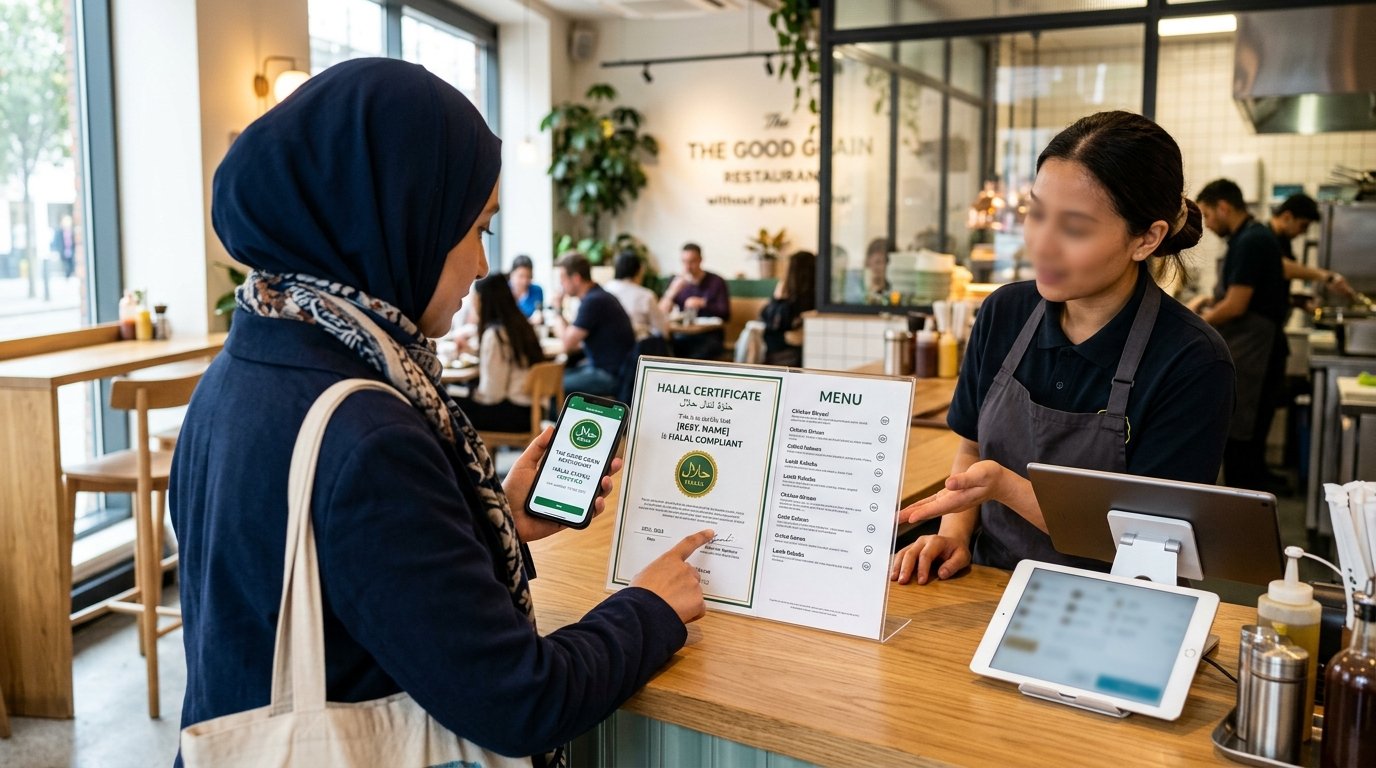
Finding a restaurant that serves delicious food is easy. Finding one that is genuinely halal can require a little more care.
A map listing, window sign, or delivery-app label may tell you that a restaurant offers halal dishes, but it does not always explain where the meat comes from, whether the whole menu is halal, or how the food is prepared.
When searching for halal food near me, the best choice is not necessarily the closest or highest-rated restaurant. It is the place that combines trustworthy halal practices, good hygiene, suitable menu choices, fair prices, and consistently positive customer experiences.
This guide explains how to find reliable local halal restaurants, what to check before ordering, and how to avoid common misunderstandings.
What Does Halal Food Mean?
The Arabic word “halal” means permitted or lawful. In food, it generally refers to ingredients, meat, preparation methods, and handling practices that comply with Islamic dietary requirements.
Halal food must not contain prohibited ingredients such as pork or pork-derived substances. Alcohol and intoxicating ingredients are also avoided. When meat is involved, it must come from an acceptable animal and be prepared according to relevant Islamic requirements.
Certification bodies may evaluate more than the meat itself. Their assessments can include ingredients, additives, production facilities, labelling, cleaning processes, storage, and food handling. The Halal Food Authority describes certification as a formal process used to verify whether products, facilities, or services comply with Islamic dietary rules.
However, halal standards and scholarly interpretations can differ. Some diners have specific preferences regarding hand slaughter, mechanical slaughter, stunning, alcohol service, or shared cooking equipment. A restaurant that satisfies one customer may not meet another customer’s personal standard.
That is why asking clear questions is often more useful than relying on a general claim.
The Fastest Ways to Find Local Halal Restaurants
Search engines and food apps make discovering local restaurants easier, but their information should be treated as a starting point rather than final proof.
Use a Specific Search Phrase
Instead of entering only a broad phrase, add details about the dish, neighbourhood, budget, or service you need.
Useful searches include:
- Halal burgers open now
- Halal family restaurant nearby
- Halal breakfast in my area
- Certified halal restaurant in [city]
- Halal takeaway with delivery
- Halal steakhouse near [neighbourhood]
- Halal restaurant open late
- Muslim-owned restaurants nearby
Specific searches normally produce more relevant results and reduce the time spent checking unsuitable businesses.
Check Google Maps Carefully
Google Maps can help you compare:
- Distance and directions
- Opening hours
- Recent photographs
- Customer ratings
- Menu links
- Telephone numbers
- Delivery and collection options
- Questions answered by the business
- Recent customer reviews
Pay particular attention to information added recently. A review from several years ago may describe a previous owner, supplier, menu, or halal policy.
Open the restaurant’s official website or social profile as well. Some businesses explain their meat supplier, certifying body, or halal status in more detail outside their map listing.
Use Dedicated Halal Restaurant Platforms
Specialist directories may provide information that ordinary restaurant apps do not display.
For example, Zabihah allows users to search by location and cuisine while viewing community reviews, halal status, directions, and information about whether a restaurant serves alcohol. The platform says its listings distinguish between fully and partially halal establishments where such information is available.
Dedicated apps can be useful, but listings may still become outdated. Confirm important details directly with the restaurant before travelling or placing a large order.
Ask the Local Muslim Community
Recommendations from local mosques, Islamic centres, university societies, neighbourhood groups, and Muslim friends can be especially valuable.
Local diners often know details that are missing online, such as:
- Whether the restaurant recently changed suppliers
- Which menu items are halal
- Whether separate cooking equipment is used
- Which branch of a chain offers halal meat
- Whether the owners welcome questions about sourcing
- Which restaurants remain open during Ramadan
Community recommendations should still be checked, but they can quickly narrow down your options.
How to Check Whether a Restaurant Is Genuinely Halal
A halal logo or verbal claim may be reassuring, but it is reasonable to request more information politely.
Look for Current Certification
A certified restaurant may display a certificate near the entrance, checkout counter, menu, or website.
Check:
- The name of the certifying organisation
- The restaurant or company named on the certificate
- The certificate’s validity period
- Whether it applies to the whole restaurant or selected products
- Whether the certification can be confirmed through the certifier
Certification bodies commonly use audits, ingredient checks, monitoring, documentation, and labelling requirements to assess compliance.
An old certificate should not automatically be treated as proof of current status. Suppliers, ownership, recipes, and preparation methods can change.
Ask Where the Meat Comes From
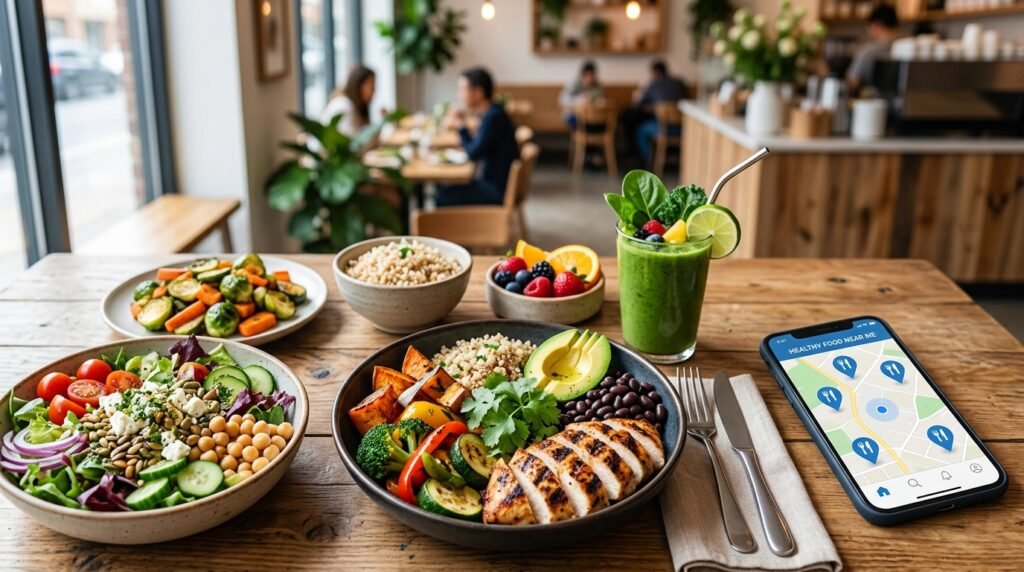
A direct question can provide more useful information than simply asking, “Is everything halal?”
Try asking:
- Is all the meat halal?
- Who supplies your chicken, beef, or lamb?
- Is the restaurant certified?
- Which organisation provides the certification?
- Are only certain dishes halal?
- Has the supplier changed recently?
Reliable staff should normally be able to answer basic questions or ask a manager for clarification. A vague response does not automatically mean the food is unsuitable, but it gives you less information on which to base your decision.
Check for Shared Equipment
Cross-contact can happen when halal food touches prohibited ingredients or surfaces used for them. The American Halal Foundation describes halal cross-contamination as contact between halal products and forbidden substances, including pork derivatives or alcohol.
In a mixed kitchen, useful questions include:
- Are separate fryers used?
- Is halal meat stored separately?
- Are knives and chopping boards shared?
- Are pizzas prepared on the same surfaces?
- Is pork cooked on the same grill?
- Does the sauce contain cooking wine or alcohol?
Personal requirements vary. Some diners are comfortable with a mixed kitchen that follows careful separation procedures, while others choose fully halal establishments only.
Halal, Halal-Friendly and Muslim-Owned: The Difference
These descriptions are sometimes used as though they mean the same thing, but they can indicate different levels of assurance.
| Description | What It May Mean | What to Confirm |
|---|---|---|
| Halal-certified | A certifying organisation has assessed specified products or processes | Check the certifier, scope and expiry date |
| Fully halal | The business claims the complete food menu follows halal requirements | Ask about drinks, suppliers and shared equipment |
| Halal options available | Only selected dishes or meats may be halal | Identify the exact items and preparation method |
| Halal-friendly | The restaurant accommodates Muslim customers but may not be certified | Ask detailed questions before ordering |
| Muslim-owned | The owner is Muslim | Do not assume every ingredient or dish is halal |
| Vegetarian or vegan | No meat is used in the selected dish | Check alcohol, gelatine, cheese enzymes and cross-contact |
A Muslim-owned business may take halal compliance very seriously, but ownership alone is not a substitute for accurate ingredient and sourcing information.
Similarly, vegetarian food is not automatically halal. A dessert may contain gelatine, a sauce may include alcohol, or a cheese may use an unsuitable animal-derived enzyme.
How to Read Reviews More Effectively
A high overall rating does not necessarily tell you whether a restaurant meets your dietary needs.
Search within reviews for words such as:
- Halal
- Certificate
- Supplier
- Alcohol
- Pork
- Separate fryer
- Prayer space
- Family
- Clean
- Recent menu
Focus on detailed reviews that explain what the customer ordered and what the staff confirmed.
Be cautious when reviews contradict one another. The restaurant may have changed its policy, different branches may use different suppliers, or only part of the menu may be halal.
The safest step is to contact the exact location you plan to visit.
Choosing the Right Restaurant for Your Needs
Halal status is essential, but it is not the only factor that shapes a good meal.
For Families
Look for comfortable seating, highchairs, children’s meals, accessible toilets, manageable noise levels, and easy parking.
A restaurant described as family-friendly may still become crowded at weekends, so booking ahead can be helpful.
For Takeaway and Delivery
Check whether the delivery menu clearly marks halal dishes. Packaging should be secure, especially when a restaurant handles both halal and non-halal orders.
Ordering directly from the restaurant can make it easier to add dietary notes and ask questions before payment.
For Late-Night Dining
Confirm the kitchen’s closing time rather than relying only on the business closing time. Some restaurants stop taking food orders 30 to 60 minutes before closing.
During Ramadan, opening hours may change significantly. A business may introduce iftar packages, suhoor service, advance booking, or shorter daytime hours.
For People With Allergies
Halal certification does not mean a meal is free from allergens.
Always discuss allergies separately. Ask about ingredients, preparation surfaces, sauces, marinades, cooking oils, and possible cross-contact. Serious allergies should never be managed by relying only on a menu symbol.
Popular Types of Halal Cuisine to Explore
Halal dining is not limited to one region or style of cooking. Depending on your city, you may find:
- Pakistani biryani, karahi and kebabs
- Indian curries and grilled dishes
- Turkish pide, döner and mixed grills
- Lebanese shawarma, hummus and kofta
- Yemeni mandi and fahsa
- Malaysian nasi lemak and satay
- Indonesian rendang and fried rice
- American burgers, steaks and fried chicken
- Mexican tacos made with halal meat
- Chinese noodles, dumplings and stir-fries
- Korean fried chicken and barbecue
- Italian pizza and pasta
- African rice, stews and grilled meat
Local halal dining is becoming more varied in many cities. Recent restaurant coverage in the United States, for example, has highlighted halal smash burgers, shawarma, seafood, steaks, fried chicken and South Asian dishes rather than a single traditional category.
Common Mistakes to Avoid
One frequent mistake is assuming that every branch of a restaurant chain follows the same halal policy. Certification and suppliers may vary by location. The Halal Food Authority notes, for example, that only certain UK branches of some chains offer certified halal products.
Other mistakes include:
- Trusting an outdated photograph of a certificate
- Assuming a Muslim employee confirms the whole menu
- Treating “no pork” as equal to fully halal
- Forgetting to check sauces, desserts and side dishes
- Relying on one old review
- Failing to ask about shared fryers or grills
- Assuming vegan food contains no alcohol
- Ordering from a different branch without checking it
A brief telephone call can prevent most of these problems.
A Simple Five-Minute Verification Method
When you find a promising restaurant, follow this process:
- Check its official website, menu and recent social posts.
- Read recent reviews mentioning halal status.
- Look for a named certification body or supplier.
- Contact the exact branch with two or three clear questions.
- Decide whether the answers meet your personal requirements.
You do not need to interrogate restaurant staff. Be polite, specific and realistic. Good businesses usually appreciate customers who explain their dietary needs clearly.
ALSO READ: Taylor Breesey Face Reveal Everything You Need to Know About the Viral Search
Final Thoughts
The best local halal meal is one you can enjoy with confidence.
Start with maps, specialist directories, community recommendations, and recent reviews. Then verify the restaurant’s certification, meat supplier, menu coverage, and preparation practices when those details matter to you.
Do not judge a restaurant by a halal sign alone. Look for transparent answers, current information, clean food handling, consistent service, and dishes that genuinely suit your taste and budget.
A few minutes of checking can lead you beyond the nearest option and help you discover a trustworthy local favourite.
FAQs
How can I find halal restaurants close to my location?
Use Google Maps, a halal restaurant directory, delivery apps, or recommendations from a nearby mosque or Muslim community group. Compare recent reviews, opening hours and menus before contacting the restaurant to confirm its current halal status.
Is a restaurant halal just because it does not serve pork?
No. Halal requirements can also involve meat sourcing, slaughter methods, alcohol, animal-derived ingredients, storage, preparation equipment and cross-contact. “No pork” answers only one part of the question.
Can a restaurant serve alcohol and still offer halal food?
Some restaurants serve halal-certified meat while also offering alcohol. Whether you choose to eat there depends on the restaurant’s handling procedures and your personal religious standard. Ask whether alcohol is used in any dishes or sauces.
Are vegetarian dishes always halal?
Not necessarily. Vegetarian dishes may contain alcohol, unsuitable cheese enzymes, flavourings or other questionable ingredients. They may also be prepared on equipment shared with non-halal food.
How do I know whether a halal certificate is genuine?
Check the certifying organisation, business name, certificate number, covered products and expiry date. Where possible, confirm the certificate through the certifier’s official directory or contact details.
Do all branches of the same restaurant use halal meat?
No. Different branches may use different suppliers, menus and certification arrangements. Always check the exact location you intend to visit.
For more updates visit: Tum Bons