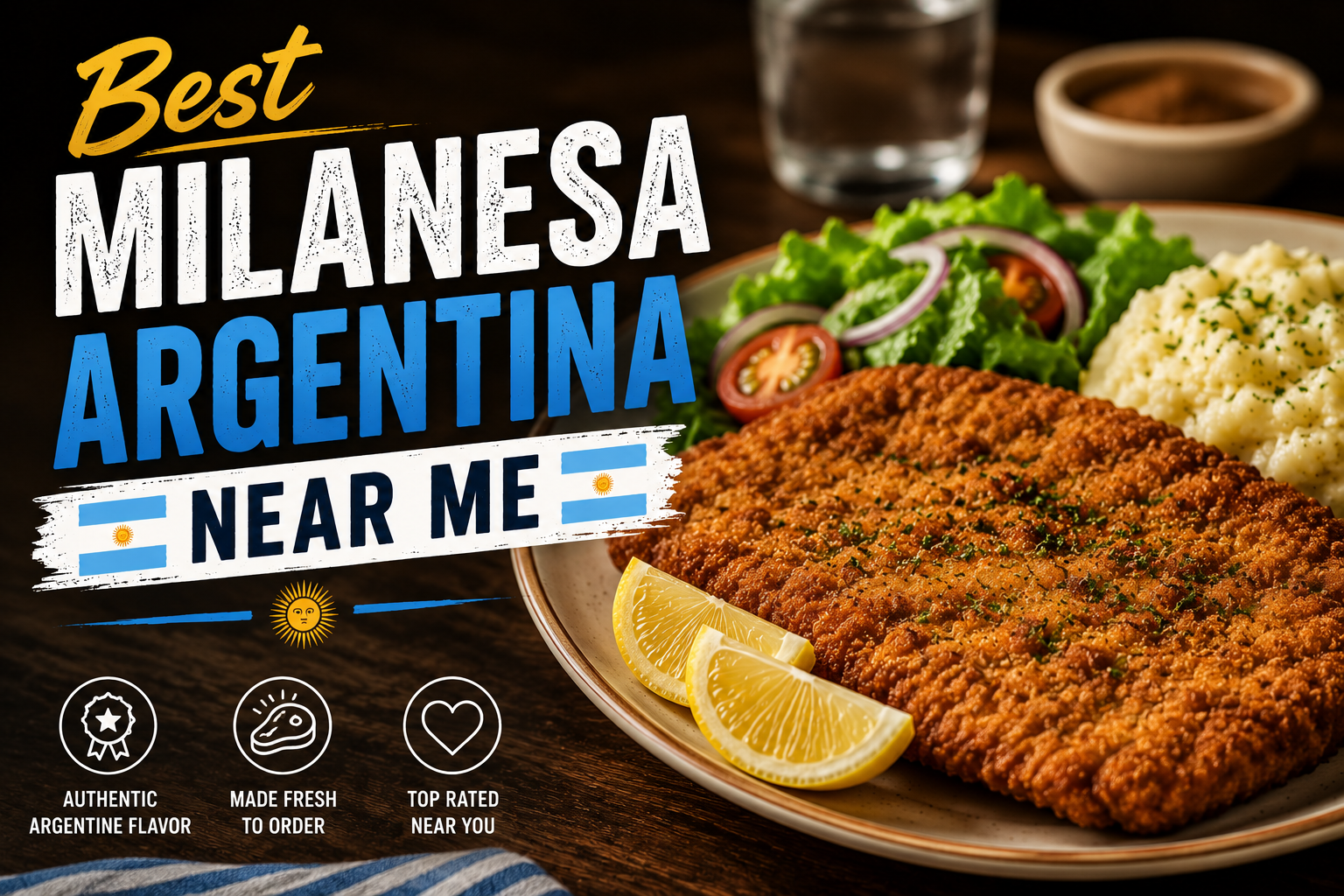
A great milanesa delivers three things in the first bite: a crisp golden coating, tender meat, and balanced seasoning. It should feel comforting rather than greasy, with enough texture to stay crunchy beneath a squeeze of fresh lemon.
Finding the Best Milanesa Argentina Near Me, however, is not always as easy as choosing the closest restaurant. Many places serve breaded beef or chicken cutlets, but not every version follows the style commonly found in Argentine homes, cafés, bodegones, and neighborhood restaurants.
This guide explains what authentic Argentine milanesa looks like, which varieties are worth ordering, and how to compare nearby restaurants before spending your money.
What Is Argentine Milanesa?
Argentine milanesa is a thin piece of meat coated in egg and breadcrumbs, then fried or baked until golden. Beef is the classic choice, although chicken, pork, fish, eggplant, and plant-based versions are also available.
The dish is closely connected with Italian immigration to Argentina and is generally linked to cotoletta alla milanese. Over time, Argentines adapted the idea to local ingredients, especially the country’s widely available beef, and transformed it into an everyday comfort food.
A traditional plate is often served with:
- French fries
- Mashed potatoes
- A simple salad
- Lemon wedges
- Fried eggs
- Tomato sauce, ham, and cheese
It may also appear inside a sandwich with lettuce, tomato, cheese, and mayonnaise.
Quick Answer: How to Find a Good Milanesa Nearby
Search Google Maps or your preferred restaurant app for Argentine restaurants, bodegones, steakhouses, and Latin American cafés. Then compare recent food photos, menu descriptions, customer comments, portion sizes, and preparation methods.
The best option will usually have:
- A thin, tender cutlet
- An even golden crust
- Fresh breadcrumbs
- Minimal excess oil
- Clear Argentine menu choices
- Consistently positive recent reviews
- Traditional sides and toppings
Do not judge a restaurant only by its overall star rating. Read comments that mention the milanesa specifically, because a restaurant may be popular for steak or empanadas while serving an average breaded cutlet.
What Makes a Milanesa Truly Good?
A milanesa is a simple dish, so small mistakes become easy to notice. The meat, breading, oil, seasoning, and cooking time must all work together.
Thin and Tender Meat
The cutlet should be relatively thin and easy to cut. A thick or poorly tenderized piece may become chewy before the coating turns crisp.
Traditional Argentine beef versions often use lean, boneless cuts. Chicken is also common and can be an excellent choice when prepared carefully.
The meat should still have moisture. Dryness normally suggests that it was cooked too long, kept warm for an extended period, or reheated badly.
Crisp, Well-Attached Breading
The coating should stay attached when you cut the meat. Large empty spaces between the crust and cutlet can indicate poor breading technique or excessive moisture.
Look for a crust that is:
- Golden rather than very dark
- Crisp across the whole surface
- Seasoned but not overly salty
- Light enough to complement the meat
- Free from a heavy oily taste
A properly cooked milanesa balances a crunchy exterior with a tender centre. That contrast is one of the qualities diners and food writers consistently value in the dish.
Fresh, Clean Flavour
Fresh oil makes a noticeable difference. A bitter, stale, or unusually heavy flavour can suggest that the frying oil has been reused too many times.
A good restaurant should also serve the milanesa hot. Delivery versions may lose some crunch because steam becomes trapped inside the container, so dine-in orders usually provide the clearest test of quality.
Popular Types of Argentine Milanesa
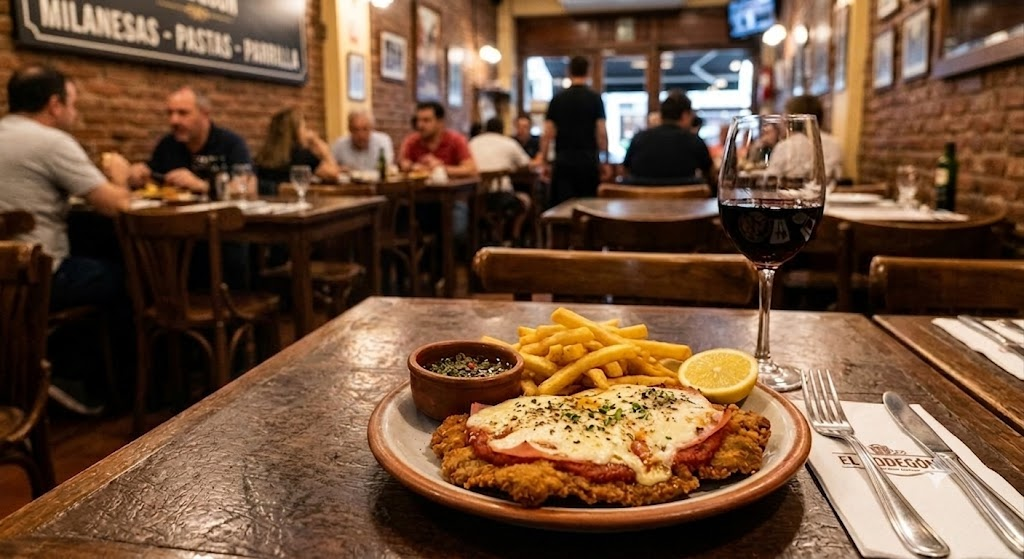
Different versions suit different appetites. Understanding the menu will help you order something you are likely to enjoy.
| Type | Main Features | Best For |
|---|---|---|
| Milanesa clásica | Breaded beef cutlet, usually with lemon | First-time diners |
| Milanesa de pollo | Breaded chicken cutlet | A lighter meat flavour |
| Milanesa napolitana | Tomato sauce, ham and melted cheese | A rich, filling meal |
| Milanesa a caballo | Topped with one or two fried eggs | A hearty traditional plate |
| Sándwich de milanesa | Cutlet in bread with salad and sauces | Lunch or takeaway |
| Milanesa completa | Cutlet with generous sides and toppings | Large appetites |
| Milanesa de berenjena | Breaded eggplant | Vegetarian diners |
Milanesa Clásica
This is the best choice for evaluating a restaurant’s basic technique. Without heavy toppings, you can properly judge the meat, seasoning, crust, and freshness.
It commonly arrives with fries, salad, mashed potatoes, or a lemon wedge. The lemon adds acidity and cuts through the richness without hiding the flavour.
Milanesa Napolitana
Milanesa napolitana is topped with tomato sauce, ham, and melted cheese. Some restaurants add sliced tomato, oregano, or other small variations.
Despite its name, this style is closely associated with Buenos Aires rather than the Italian city of Naples. Its familiar combination of breaded meat, tomato, ham, and cheese makes it one of the richest and most popular choices.
Choose it when you want something similar in spirit to chicken Parmesan, but with a distinctly Argentine identity.
Milanesa a Caballo
“A caballo” generally means that the milanesa is served with fried eggs on top. Fries are a common side, making this a substantial meal.
The runny or softly cooked yolk adds richness to the crisp breading. Diners who prefer fully cooked eggs should mention that when ordering.
Sándwich de Milanesa
A milanesa sandwich commonly includes a bread roll, lettuce, tomato, mayonnaise, and optional cheese. Recipes and restaurant versions differ, but the combination is designed to provide crunch, freshness, and richness in each bite.
This format is particularly associated with Tucumán, where the sandwich has major cultural importance and has been officially recognised as part of the province’s cultural heritage.
How to Compare Local Restaurants
A search result can show dozens of options, especially in a large city. Use the following process to narrow them down.
Check the Actual Menu
Confirm that the restaurant serves Argentine-style milanesa rather than another country’s variation. Mexican milanesa, Italian cotoletta, Austrian schnitzel, and American chicken-fried steak share similarities, but their seasoning, cuts, accompaniments, and presentation can differ.
Useful Argentine menu terms include:
- Milanesa de carne
- Milanesa de pollo
- Napolitana
- A caballo
- Con papas fritas
- Puré de papas
- Ensalada mixta
- Sándwich de milanesa
A menu offering several of these choices is more likely to treat milanesa as an important dish rather than an occasional extra.
Study Recent Customer Photos
Restaurant photos are often more informative than polished promotional images. Look at pictures posted within the last few months and check:
- Whether the breading appears evenly cooked
- How thick the meat looks
- Whether the portion matches the price
- How fresh the sides appear
- Whether dine-in and delivery portions differ
- Whether the dish looks consistent across several visits
One attractive photo does not prove consistency. Five or six similar recent photos provide stronger evidence.
Read Dish-Specific Reviews
Search within the reviews for “milanesa,” “napolitana,” “crispy,” “tender,” “dry,” “greasy,” or “portion.”
Comments such as “great food” are too general. More useful reviews describe the actual cutlet, toppings, temperature, sides, and service.
Give greater weight to recent, detailed reviews than to older one-line comments. Restaurant chefs, suppliers, prices, and preparation standards can change.
Compare Value, Not Just Price
A low-priced milanesa is not necessarily good value if it is small, oily, or served with weak sides. Likewise, an expensive version may not be worth it simply because it comes from a fashionable restaurant.
Consider the full meal:
- Size of the cutlet
- Quality of the meat
- Included side dishes
- Freshness
- Restaurant service
- Delivery fees
- Portion suitable for sharing
- Consistency reported by customers
Some oversized milanesas are designed for two or more diners. Check the menu carefully before ordering multiple portions.
Dine-In, Takeaway, or Delivery?
Dine-in is usually best for maximum crispness. The cutlet reaches the table quickly, and moisture has less time to soften the coating.
Takeaway can still work well when the restaurant uses a ventilated container and packs wet toppings or salad separately.
For delivery, consider ordering a classic milanesa rather than one covered in sauce. Napolitana toppings naturally soften the crust during transport. You can also request lemon and sauces on the side.
When your order arrives, avoid leaving it sealed for too long. Opening the container allows trapped steam to escape.
What Should You Order on Your First Visit?
Start with the classic beef milanesa if you eat beef. It gives you the clearest picture of the kitchen’s skill.
Choose chicken if you prefer a milder taste. Order napolitana when you want a richer, cheese-covered meal, or a caballo when you want extra protein and a more filling plate.
A balanced first order might include:
- One classic beef milanesa
- Fries or mashed potatoes
- A mixed salad
- Lemon wedges
- Chimichurri or salsa on the side
Although chimichurri is strongly associated with Argentine food, not every restaurant serves it with milanesa. Try the cutlet before adding a strong sauce so you can judge its original flavour.
Common Warning Signs
Skip or reconsider a restaurant when several recent reviews repeatedly mention the same problem.
Warning signs include:
- Soggy or falling breading
- Tough, unusually thick meat
- Burnt edges
- A strong old-oil taste
- Cold delivery orders
- Misleading portion photos
- Inconsistent quality
- Missing toppings
- Long unexplained preparation times
One negative review should not automatically disqualify a restaurant. Patterns matter more than isolated complaints.
Can You Find a Good Vegetarian Milanesa?
Yes. Eggplant is one of the most recognisable meat-free alternatives. Some restaurants also use soy, chickpeas, lentils, or other vegetable mixtures.
Vegetarian diners should ask whether the product is cooked in shared oil with meat. They should also confirm whether the breadcrumbs, cheese, sauces, and toppings meet their dietary needs.
A good eggplant milanesa should be tender inside without becoming watery. Its breading should remain crisp and properly seasoned.
ALSO RAED: Business for Sale How to Find and Buy the Right One
Conclusion
The Best Milanesa Argentina Near Me is not automatically the restaurant with the highest rating or the largest portion. It is the place that consistently serves tender meat, crisp breading, fresh sides, and the style you actually enjoy.
Begin with local Argentine restaurants and bodegones. Study recent dish photos, read milanesa-specific reviews, compare menus, and choose dine-in for the best first experience. A classic version reveals the kitchen’s skill, while napolitana, a caballo, and sandwich varieties offer richer ways to explore this much-loved Argentine comfort food.
FAQs
What is the difference between milanesa and schnitzel?
Both are breaded cutlets, but their culinary traditions and usual preparation differ. Argentine milanesa is commonly made with thin beef or chicken and served with fries, salad, mashed potatoes, eggs, or napolitana toppings. Schnitzel is most strongly associated with Austrian and Central European cuisine.
Is Argentine milanesa made from beef or chicken?
Traditional Argentine milanesa is often made from beef, but chicken is extremely common. Restaurants may also offer pork, fish, eggplant, soy, or legume-based options.
What is on a milanesa napolitana?
A typical milanesa napolitana includes a breaded cutlet topped with tomato sauce, ham, and melted mozzarella. Oregano and sliced tomato may also be added, depending on the restaurant.
Is milanesa spicy?
Traditional Argentine milanesa is generally not spicy. It is usually seasoned with salt, pepper, garlic, parsley, or similar mild flavours. Spicy sauces may be available separately.
What sides are served with Argentine milanesa?
Popular sides include French fries, mashed potatoes, mixed salad, roasted vegetables, and lemon. Milanesa a caballo also includes fried eggs.
Is milanesa the same as chicken Parmesan?
No. They are related breaded-cutlet dishes, but not identical. Chicken Parmesan normally features chicken, tomato sauce, and cheese. Argentine milanesa can use beef or chicken and is frequently served plain, with eggs, in a sandwich, or as napolitana.
For more updates visit: Tum Bons