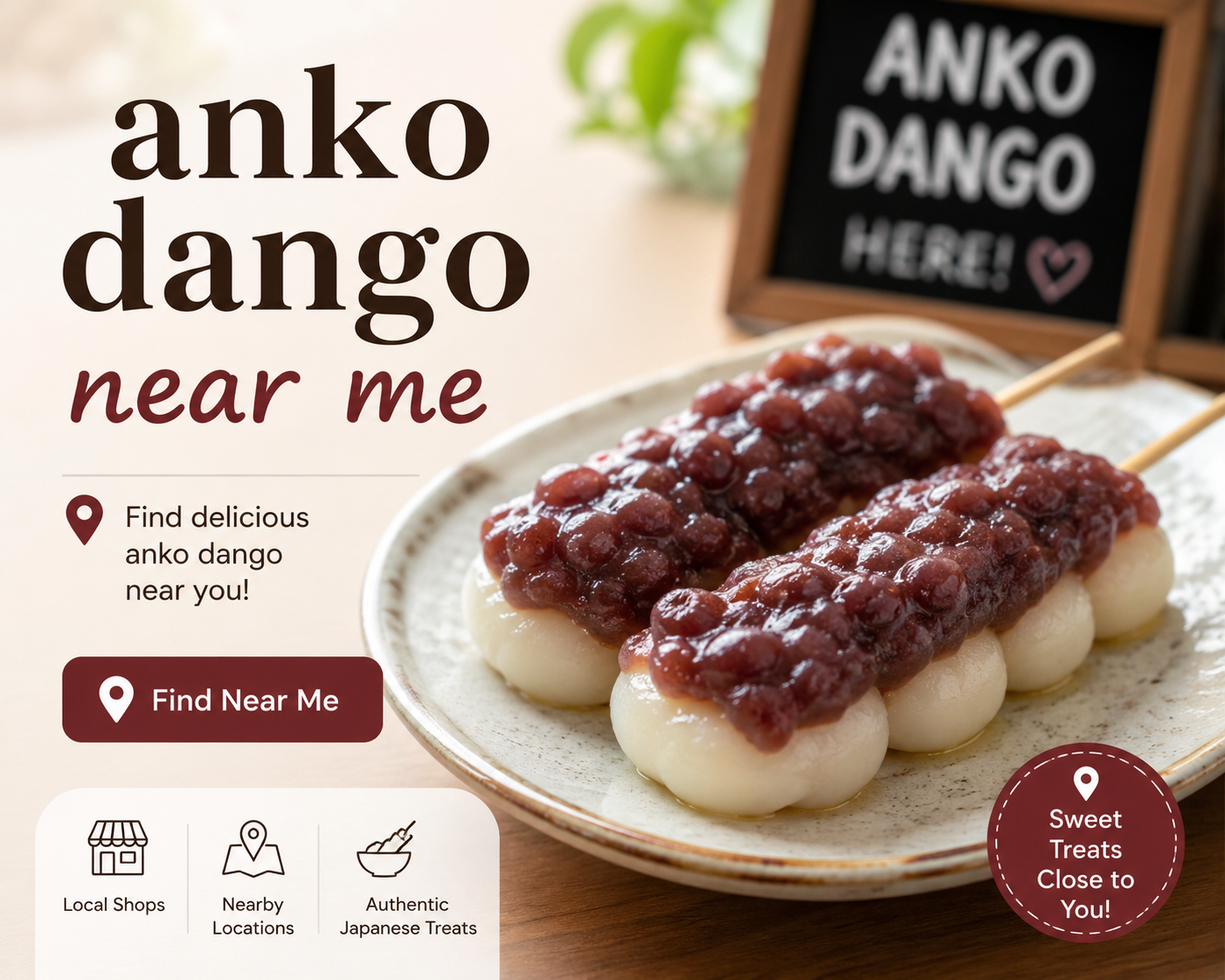
Searching for anko dango near me usually means one thing: you want soft, chewy Japanese rice dumplings topped with sweet red bean paste, and you want them without traveling across town. The challenge is that many shops do not list the dessert online under the exact English name “anko dango.”
Fortunately, there are better ways to find it.
Japanese bakeries, wagashi shops, Asian supermarkets, dessert cafés, and Japanese grocery stores may sell the same sweet as an dango, an-dango, azuki dango, red bean dango, or kushi dango with anko. Therefore, expanding your search terms can uncover options that a basic “near me” search misses.
This guide explains what to look for, where to search, how to recognize authentic anko dango, and what to try when no nearby shop has it.
What Is Anko Dango?
Anko dango is a traditional Japanese sweet made from chewy rice-flour dumplings served with anko, a sweet paste traditionally made from azuki beans and sugar. Dango commonly belongs to the broader category of Japanese sweets known as wagashi.
The dumplings are often arranged on a bamboo skewer. A generous layer of red bean paste sits across the top.
The contrast is the main attraction. Dango has a mild flavor and pleasantly chewy texture, while anko adds sweetness and the earthy character of azuki beans.
Two common forms of anko are:
- Tsubuan: Chunky red bean paste that retains pieces of azuki beans.
- Koshian: Smooth red bean paste with a finer, more uniform texture.
Both can appear on dango. Neither automatically makes the dessert more authentic than the other. Just One Cookbook, for example, identifies both tsubuan and koshian as established styles of Japanese anko.
How to Find Anko Dango Near Me
If your first search produces weak results, do not assume nobody nearby sells it. The menu may simply use another name.
1. Search several names
Start with anko dango near me, but then broaden the search.
Useful variations include:
- an dango near me
- red bean dango near me
- azuki dango near me
- Japanese dango near me
- wagashi near me
- Japanese sweets near me
- Japanese bakery near me
- kushi dango near me
This works because Japanese foods often appear under transliterated Japanese names, descriptive English names, or both.
2. Check Japanese grocery stores
Japanese supermarkets are especially useful because dango does not have to come from a dedicated dessert shop. In Japan, common varieties of dango are also sold through supermarkets and convenience stores.
Outside Japan, check the refrigerated and frozen dessert areas of Japanese or well-stocked Asian grocery stores.
However, stock changes quickly. A store that carries mitarashi dango may not have anko dango that day. Calling before making a long trip can save time.
3. Look for wagashi shops
A wagashi shop specializes in Japanese confectionery, making it one of the most promising places to check.
Search the shop’s current menu for:
dango, an-dango, anko, azuki, mochi, daifuku, manju, dorayaki, and wagashi.
Even when anko dango is unavailable, a specialist shop may carry another fresh dessert using the same sweet bean paste.
4. Check photos as well as menus
Small bakeries and dessert shops sometimes update social photos more frequently than their website menus. Photos can also help you distinguish red bean dango from mitarashi or plain dango.
Still, confirm availability directly with the business. An old photo proves that a shop sold the item at some point, not that it has it today.
Where Are You Most Likely to Find It?
The best place depends heavily on your city.
| Place | Chance of finding it | What to check |
|---|---|---|
| Japanese wagashi shop | High | Fresh an-dango and seasonal sweets |
| Japanese supermarket | Good | Refrigerated or packaged dango |
| Asian grocery store | Moderate | Japanese refrigerated/frozen section |
| Japanese bakery | Moderate | Daily dessert menu |
| Japanese café | Varies | Dessert and tea menu |
| General supermarket | Low | International or frozen-food aisle |
This table is a practical search guide, not an availability guarantee. Local inventory varies by country, city, season, and store.
If you are specifically searching for anko dango near me, specialist Japanese businesses should normally come before general supermarkets in your search.
How to Recognize Anko Dango
Anko dango is easy to confuse with other Japanese sweets.
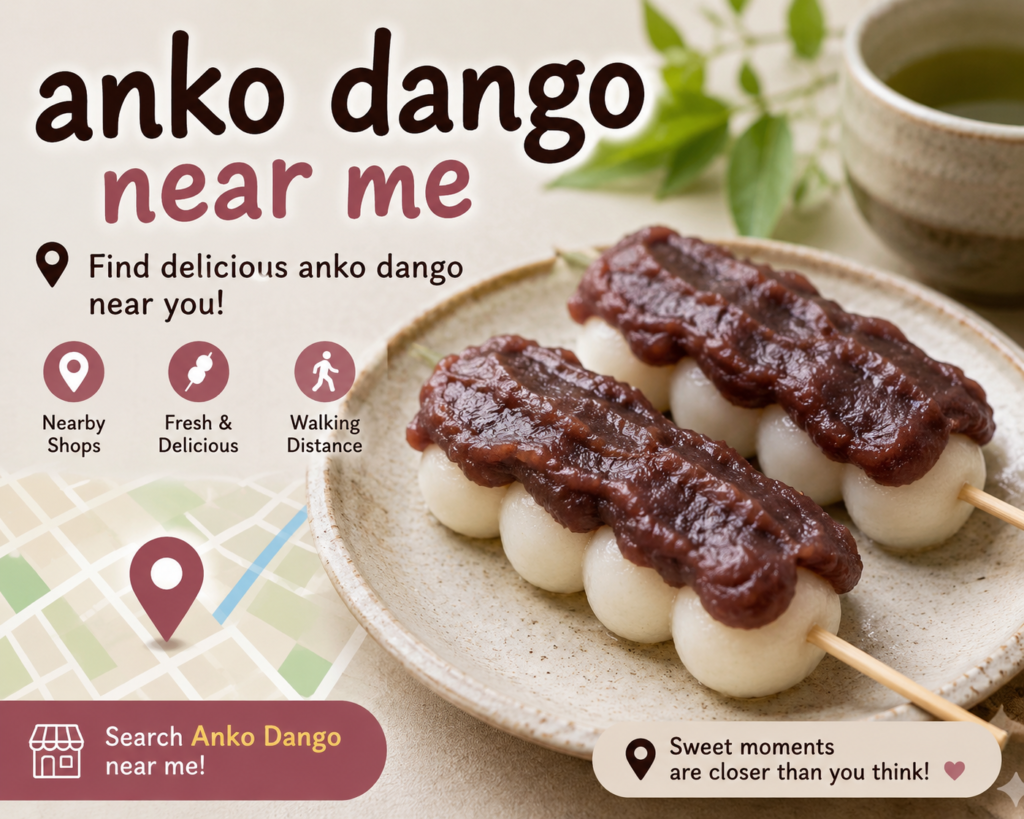
Traditional dango consists of round rice-based dumplings. Anko dango adds sweet red bean paste to those dumplings.
The finished dessert commonly has pale dumplings underneath a dark reddish-brown bean topping.
The paste may look smooth or visibly chunky depending on whether the shop uses koshian or tsubuan.
Anko Dango vs. Other Popular Dango
Knowing the difference helps when reading menus.
Mitarashi dango uses a glossy sweet-savory sauce associated with soy sauce rather than red bean paste.
Hanami dango is recognized by its pink, white, and green dumplings and is traditionally associated with cherry-blossom season.
Kinako dango uses roasted soybean flour.
Zunda dango features a green paste made from edamame and is especially associated with Japan’s Tohoku region.
Therefore, seeing “dango” on a menu does not necessarily mean the shop carries the red bean version.
What Should Good Anko Dango Taste Like?
Expect contrast rather than overwhelming sweetness.
The rice dumplings provide a chewy base. Meanwhile, the bean paste adds most of the sweetness and flavor.
Freshness also matters because texture is a major part of the dessert. Dango should generally feel soft and pleasantly chewy rather than excessively hard or dry.
The anko texture depends on its style. Tsubuan provides noticeable bean pieces, while koshian gives you a smoother finish.
Personal preference matters here. Someone who enjoys texture may prefer tsubuan, while another person may favor smooth koshian.
How Much Does Anko Dango Cost?
There is no reliable worldwide price for anko dango.
Location, portion size, ingredients, packaging, whether the product is handmade, and whether it is purchased from a restaurant or supermarket can all affect the price.
A 2026 Japan travel guide gives roughly ¥100–¥250 per skewer as a general price range for dango in Japan. However, treat that figure only as a Japan-oriented reference rather than a price you should expect in another country.
Imported or handmade Japanese sweets can cost substantially more elsewhere.
For a local-intent article, displaying a supposedly universal price would therefore be misleading. Check the current menu or contact the individual seller before visiting.
Price information last checked: August 17, 2026.
Can’t Find Anko Dango Nearby? Try These Options
A failed anko dango near me search does not mean you have to give up.
First, look for plain dango and packaged anko separately. Combining them gives you the same basic flavor pairing.
Second, search for other Japanese sweets containing anko. Daifuku, dorayaki and taiyaki commonly use sweet bean paste, although their textures and preparation differ from dango.
Finally, you can make anko dango at home.
One published anko dango recipe uses joshinko, shiratamako, sugar and warm water for the dumplings, followed by red bean paste as the topping. The dumplings are shaped, boiled, cooled, placed onto skewers and topped with anko.
Another recipe demonstrates a variation using shiratamako and silken tofu. That difference is useful because there is no single home recipe you must follow.
Check These Details Before Buying
When you find a promising shop, verify the product rather than relying only on its name.
Check whether:
- the topping is sweet azuki bean paste;
- the product is fresh, chilled, frozen, or shelf-stable;
- one order contains one or several skewers;
- the listed flavor is anko rather than mitarashi;
- the item is available today;
- ingredient and allergen information meets your needs.
Also, do not assume every dango is gluten-free, vegan, or suitable for a particular allergy simply because rice flour is a common ingredient. Recipes and production environments vary. Ask the seller when dietary restrictions matter.
Is Dango the Same as Mochi?
No. Although both are Japanese rice-based foods with a chewy texture, the terms are not interchangeable.
Dango is generally formed as small dumplings from rice flour mixtures. Mochi traditionally refers to rice cake produced from glutinous rice, although modern mochi products and recipes vary considerably.
That distinction becomes useful when shopping. A store selling mochi does not automatically sell dango.
However, a Japanese dessert shop with a broad mochi and wagashi selection is still worth checking because it may carry dango seasonally.
Best Search Strategy for Local Anko Dango
The fastest method is to combine location searches with product verification.
Search anko dango near me first. Then try “an dango,” “red bean dango,” “Japanese wagashi,” and “Japanese sweets” with your city or neighborhood.
Next, inspect recent menus, business photos, and product listings. If the information looks old, contact the shop before traveling.
This approach is more dependable than choosing a business merely because it ranks highly for a broad search. It also helps uncover smaller Japanese bakeries whose menus may not be fully indexed by search engines.
Most importantly, treat local availability and prices as time-sensitive information.
ALSO READ: Halal Food Near Me How to Find the Best Local Options
Conclusion
Finding authentic anko dango near me becomes easier once you search beyond the exact English phrase. Look for an-dango, red bean dango, azuki dango, kushi dango, and wagashi, then check Japanese specialty shops and supermarkets.
Because menus and inventory change, verify availability before making a special trip. And if no local shop carries it, homemade dango with quality anko offers a practical alternative.
FAQs
Where can I buy anko dango near me?
Start with Japanese wagashi shops, Japanese supermarkets, Asian grocery stores, bakeries, and Japanese cafés. If the exact search fails, try “an dango,” “red bean dango,” “azuki dango,” and “wagashi near me.”
What is anko dango made from?
Anko dango combines Japanese rice-flour dumplings with sweet anko. Traditional red anko is made primarily from azuki beans and sugar. Both smooth koshian and chunky tsubuan versions exist.
Is anko dango very sweet?
The topping provides most of the sweetness, while the dango itself is comparatively mild. Sweetness varies because recipes and the amount of anko differ between sellers.
What is the difference between anko and mitarashi dango?
Anko dango uses sweet red bean paste. Mitarashi dango uses a sweet-savory soy-based glaze. Therefore, they can share the same basic dumpling but offer noticeably different flavors.
Can I make anko dango at home?
Yes. Home recipes generally involve preparing rice-flour dough, shaping it into balls, boiling the dumplings, cooling them, placing them on skewers, and adding anko. Exact flour mixtures vary by recipe.