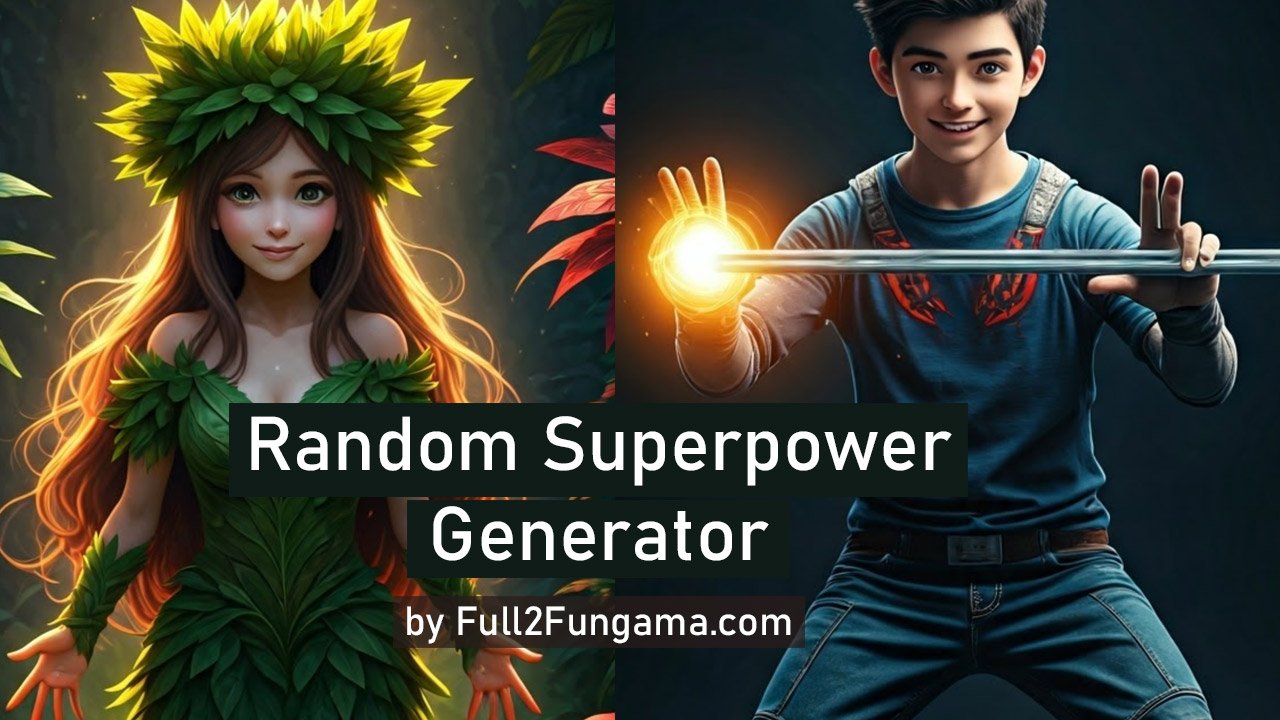
Creating a superhero sounds easy until you reach the biggest question: What should their power be? It’s tempting to choose familiar abilities like flight or super strength, but those ideas have been explored countless times. A random superpower offers a different approach by introducing unexpected abilities that can lead to more original characters and stories.
Writers, artists, game masters, and comic fans often use random powers as creative prompts rather than finished ideas. A surprising ability can spark an entirely new plot, inspire a memorable villain, or encourage you to think about his challenges from a fresh perspective.
This guide explains what a random superpower is, why it fuels creativity, how to develop one into a believable character, and how to avoid common storytelling mistakes.
What Is a Random Superpower?
A random superpower is a fictional ability selected without planning or preference. It may come from a random generator, a card game, a writing prompt, or even a friend’s suggestion.
The idea isn’t simply to assign a strange ability. Instead, it’s to encourage creativity by working with something unexpected.
For example, a random power could be:
- Gravity manipulation
- Shadow travel
- Animal empathy
- Time perception
- Weather control
- Crystal creation
- Dream walking
- Voice mimicry
- Magnetic fields
- Emotion sensing
Some powers appear incredibly useful, while others seem ordinary at first. The challenge lies in turning any ability into an interesting story.
Why Random Superpowers Inspire Better Creativity
When people choose abilities themselves, they often return to familiar favorites. Random selection removes that habit and forces new ideas to emerge.
Imagine receiving the power to control paper instead of fire. At first, it may seem underwhelming. But after some thought, paper could become razor sharp, fold into protective armor, or transform into lifelike creatures.
Creative restrictions often produce stronger ideas than unlimited choices.
Unexpected abilities also encourage problem-solving. Instead of asking, “How powerful can this hero become?” the better question becomes, “How can this hero succeed despite their unusual ability?”
Types of Random Superpowers
Random abilities generally fall into several broad categories.
Physical Abilities
These powers enhance the body or physical performance.
Examples include:
- Super strength
- Enhanced speed
- Elastic limbs
- Regeneration
- Wall climbing
- Enhanced senses
These are common in superhero comics because they’re easy to understand and visualize.
Mental Abilities
Mental powers focus on intelligence, perception, or controlling the mind.
Popular examples include:
- Telepathy
- Telekinesis
- Memory alteration
- Illusion casting
- Future vision
- Mind control
These abilities often create psychological conflicts rather than purely physical battles.
Elemental Powers
Elemental abilities allow a character to manipulate natural forces.
Examples include:
- Fire
- Ice
- Water
- Earth
- Wind
- Lightning
Although these powers are familiar, adding unique limitations can make them feel fresh.
Energy-Based Powers
These abilities involve controlling different forms of energy.
Examples include:
- Force fields
- Energy blasts
- Light manipulation
- Sound waves
- Radiation control
- Plasma generation
Energy powers are common in science fiction and futuristic settings.
Reality-Altering Powers
Some fictional abilities affect the rules of reality itself.
Examples include:
- Time manipulation
- Gravity control
- Probability shifting
- Space distortion
- Dimensional travel
Because these powers can become overwhelming, they usually require strict limitations.
Nature and Animal Powers
Nature-based abilities connect characters with living organisms or ecosystems.
Examples include:
- Plant growth
- Animal communication
- Weather influence
- Forest regeneration
- Insect control
These powers often suit environmentally themed stories.
Benefits of Using a Random Superpower
Encourages Original Characters
Unexpected abilities reduce the chance of creating heroes who resemble existing comic book characters.
Originality often comes from combining unusual powers with believable personalities.
Helps Overcome Writer’s Block
Facing a blank page can be frustrating.
A random ability gives writers an immediate starting point, making it easier to build a character around a concrete idea instead of endless possibilities.
Makes Games More Interesting
Role-playing games become less predictable when players don’t choose their abilities in advance.
Random powers encourage creative teamwork and unconventional problem-solving.
Supports Creative Learning
Teachers sometimes use random powers as classroom writing prompts.
Students can practice storytelling, character development, and critical thinking while having fun.
How to Develop a Random Superpower into a Great Character
A random ability is only the beginning. What makes a character memorable is how that power shapes their life.
Step 1: Understand the Ability
Before building a story, define exactly what the power can and cannot do.
Clear rules prevent inconsistencies later.
Step 2: Add Limitations
Limitations create suspense.
For example:
| Superpower | Possible Limitation |
|---|---|
| Flight | Cannot fly in storms |
| Telepathy | Only works with eye contact |
| Fire control | Requires existing flames |
| Time stop | Lasts only five seconds |
| Invisibility | Clothing remains visible |
A balanced character is often more engaging than an unstoppable one.
Step 3: Create Personal Motivations
Ask questions such as:
- Why does the character use this power?
- What do they fear?
- What responsibilities come with it?
- Would they rather live a normal life?
Personal goals make stories emotionally engaging.
Step 4: Design Meaningful Challenges
Every story needs obstacles.
Instead of constantly increasing power levels, create situations where intelligence, teamwork, or sacrifice matter more than raw strength.
Step 5: Consider the World Around Them
Think about how society reacts.
Would governments study the hero?
Would ordinary people fear them?
Would businesses try to profit from their ability?
A believable world responds naturally to extraordinary powers.
Examples of Interesting Random Superpowers
Here are a few unusual ideas that can inspire original stories.
Memory Painting
Anything painted becomes a visible memory from the past.
Living Compass
The character always knows the safest direction to travel.
Echo Duplication
Every sound creates temporary physical copies of objects.
Emotional Weather
The surrounding weather changes based on the user’s emotions.
Gravity Threads
Invisible strings connect nearby objects, allowing precise movement.
Temporary Genius
The character becomes extraordinarily intelligent for exactly one minute every day.
Each of these powers encourages creative storytelling because they include natural opportunities for conflict and growth.
Common Mistakes When Using Random Superpowers
Ignoring Weaknesses
Powerful abilities become less interesting when they have no meaningful drawbacks.
Copying Existing Heroes
Changing the color of a famous hero’s costume doesn’t create originality.
Focus on unique combinations of personality, goals, and limitations.
Making Every Problem About Fighting
Many great stories involve mystery, diplomacy, survival, or emotional growth rather than combat.
A superpower should influence the story—not define every scene.
Forgetting Character Growth
The most memorable heroes evolve over time.
Sometimes the greatest change isn’t mastering a new ability but learning how to use existing powers responsibly.
Expert Tips for Creating Better Superpowers
- Mix two simple abilities instead of relying on one overwhelming power.
- Give every ability a clear cost or consequence.
- Let the power reflect the character’s personality or emotional journey.
- Avoid solving every conflict with supernatural abilities alone.
- Think about everyday uses for the power, not just dramatic battles.
- Ask how the ability changes relationships, work, and daily life.
Small details often make fictional characters feel surprisingly real.
Final Thoughts
A random superpower is more than a fun prompt—it is a creative tool that encourages original thinking and fresh storytelling. By embracing unexpected abilities, adding meaningful limitations, and focusing on character development instead of raw strength, you can create heroes and villains that feel unique and memorable.
The power itself may grab attention, but it’s the choices a character makes with that power that keep readers, players, and viewers invested.
Frequently Asked Questions
1. What is a random superpower?
A random superpower is a fictional ability selected by chance, often through a generator or writing prompt, to inspire creative characters and stories.
2. Can random superpowers improve creative writing?
Yes. They provide unexpected ideas that help writers overcome creative blocks and explore original story concepts.
3. What makes a random superpower interesting?
A compelling power has clear strengths, believable limitations, and meaningful consequences that influence the character’s decisions.
4. Are random superpowers useful for tabletop RPGs?
Absolutely. They can create memorable player characters, non-player characters, quests, and unexpected gameplay situations.
5. Should every superpower have a weakness?
In most stories, yes. Weaknesses create tension, encourage creative problem-solving, and prevent characters from becoming unbeatable.
6. Can children use random superpower ideas?
Yes. They are excellent prompts for storytelling, classroom activities, drawing challenges, and imaginative games.
7. Where can I find random superpower ideas?
You can use online generators, writing prompt websites, tabletop RPG resources, card games, or simply create your own by combining different abilities and limitations.