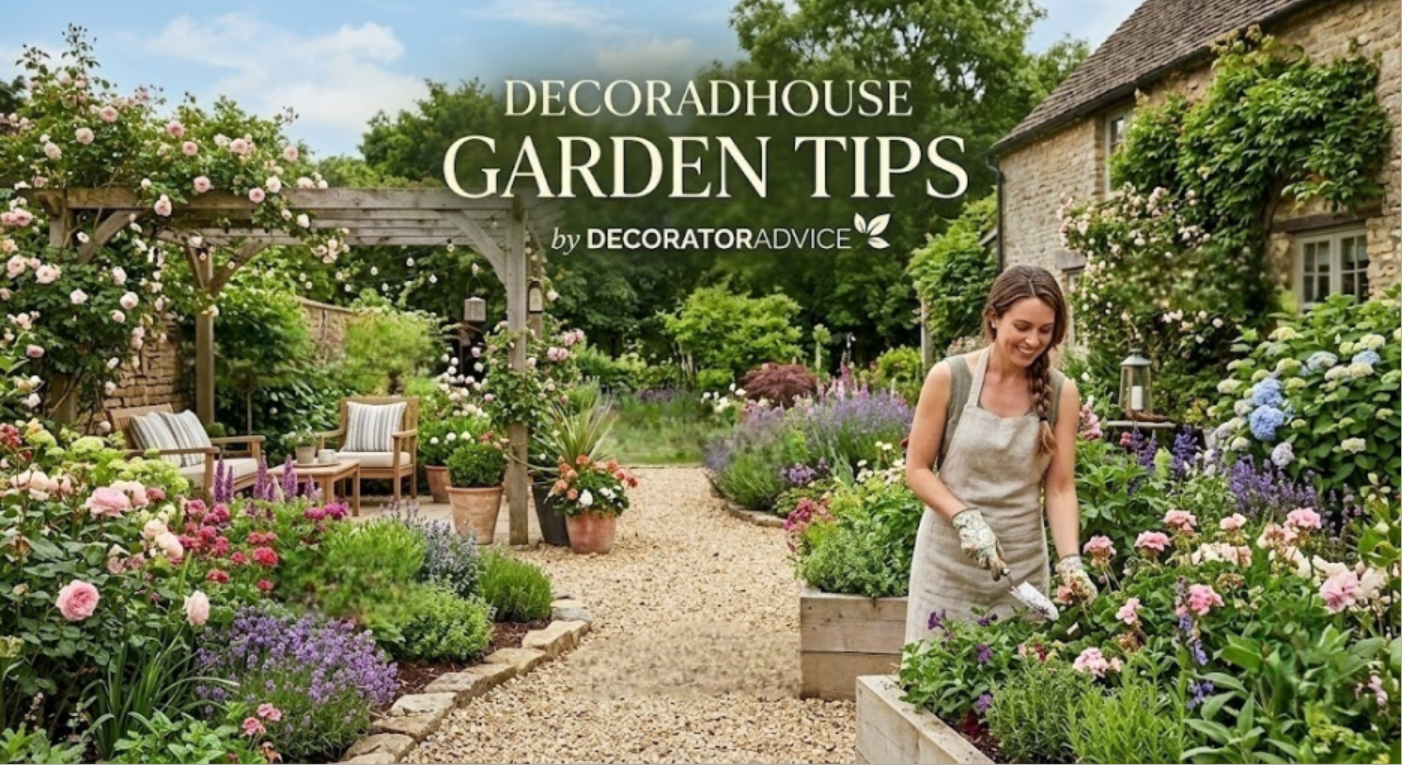
A beautiful garden does not need expensive furniture, rare plants, or a complete landscape renovation. In most cases, the biggest improvements come from thoughtful planning, suitable plants, better watering habits, and a few well-placed design features.
The ideas commonly associated with decoradhouse garden tips by decoratoradvice focus on treating the garden as an extension of the home. Instead of filling every empty corner, the goal is to create an outdoor space that feels organised, comfortable, and easy to maintain.
That approach works for large backyards, narrow side gardens, rented homes, patios, and small balconies. The key is to design around your available space, local climate, daily routine, and realistic maintenance level.
Start With a Clear Garden Plan
Buying plants before planning the space is one of the most common gardening mistakes. A colourful plant may look attractive at the shop, but it might struggle if your garden does not provide the right light, drainage, temperature, or growing space.
Begin by observing the garden for several days.
Note:
- Which areas receive full sun
- Where afternoon shade appears
- Whether rainwater collects anywhere
- Which parts are exposed to strong wind
- Where people normally walk or sit
- What views you want to highlight or hide
These observations help you divide the garden into useful zones.
For example, you might create a small seating area near the house, a sunny planting bed along a fence, and a shaded corner with foliage plants. A narrow path can connect the sections and make the layout feel intentional.
The RHS recommends choosing the right plant for the right place because matching plants to local conditions can reduce watering and improve long-term performance.
Decide What You Want From the Garden
A garden should support the way you live. Before choosing a style, identify its main purpose.
You may want:
- A peaceful place for tea or reading
- A safe family sitting area
- A low-maintenance decorative garden
- A space for growing herbs and vegetables
- A wildlife-friendly garden
- An attractive background for entertaining
- More privacy from neighbouring properties
Your priorities will affect every design decision.
A relaxation garden may need comfortable seating, shade, soft lighting, and calming greenery. An edible garden needs accessible beds, suitable sunlight, reliable watering, and practical pathways. A family garden may require open space and durable surfaces.
Trying to include every possible feature can make a small garden feel crowded. Choose one main purpose and two supporting features.
Choose a Simple Garden Style
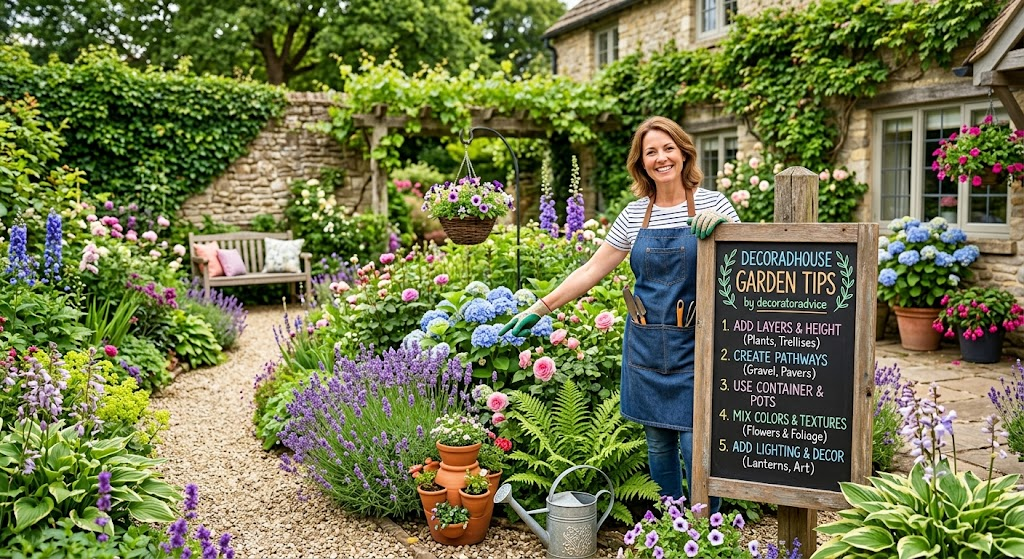
A clear visual style makes even a modest outdoor space look more polished.
You do not need to follow strict design rules. Select a basic direction and repeat a few materials, colours, and shapes throughout the garden.
| Garden style | Main features | Suitable for |
|---|---|---|
| Modern | Clean lines, limited colours, structured plants | Patios and small urban gardens |
| Cottage | Mixed flowers, informal paths, layered planting | Relaxed family gardens |
| Minimalist | Open space, simple containers, fewer plant types | Low-maintenance spaces |
| Natural | Native plants, wildlife areas, organic shapes | Pollinator-friendly gardens |
| Mediterranean-inspired | Gravel, herbs, terracotta and drought-tolerant plants | Sunny, dry locations |
Repeating the same pot material, edging, wood finish, or colour palette creates visual consistency. It also prevents the space from looking like a collection of unrelated items.
Select Plants for Your Conditions
Plants should be selected according to climate, soil, sunlight, drainage, and mature size—not only their appearance.
Check sunlight carefully
Full-sun plants normally need several hours of direct sunlight. Shade-loving plants may become stressed in intense afternoon heat, while sun-loving flowers may grow weakly in deep shade.
Observe the space at different times rather than guessing.
Consider mature plant size
A small young shrub can become much wider and taller within a few years. Check its expected mature dimensions before planting it near a wall, path, window, or another plant.
Proper spacing improves airflow and reduces overcrowding. University of Minnesota Extension notes that good air movement and watering near the soil surface can help foliage dry more quickly, which may reduce conditions that encourage certain plant diseases.
Use regionally suitable plants
Native and climate-appropriate plants are often practical choices because they are adapted to local growing conditions. However, “native” does not automatically mean that every plant will thrive in every part of your garden. You must still match it with the correct light, soil, moisture, and space.
The USDA says native plants can provide nectar, pollen, food, and shelter for wildlife while often requiring relatively low maintenance once properly established.
Before buying, consult a trusted local nursery, horticultural society, agricultural extension service, or regional plant guide.
Layer Plants for a Fuller Look
Professional-looking gardens usually contain different plant heights.
A simple layered arrangement includes:
- Trees or tall shrubs at the back
- Medium shrubs and ornamental grasses in the middle
- Perennials and flowering plants toward the front
- Ground-cover plants along the edges
This creates depth and prevents the bed from looking flat.
In a small space, the same effect can be achieved with a tall container plant, medium pots, trailing plants, and wall-mounted planters.
Limit the number of plant varieties. Repeating a few successful plants often creates a stronger design than planting one of everything.
Make Small Gardens Feel Larger
Limited space does not prevent good garden design. Small areas often become more attractive because every feature must be chosen carefully.
Use vertical space
Walls, fences, railings, and trellises can hold climbing plants, hanging baskets, shelves, or vertical planters.
Vertical gardening adds greenery without taking away valuable floor space. It can also soften plain walls and create privacy.
Make sure any structure is stable and suitable for the mature weight of the plant and container.
Keep pathways clear
Oversized pots and furniture can make movement difficult. Maintain an obvious route through the area and avoid placing decorative items where people may trip over them.
Choose multipurpose furniture
A storage bench, foldable table, or stool that doubles as a plant stand can make a small patio more functional.
Use fewer, slightly larger objects rather than many tiny decorations. Too many small items can make a compact garden feel cluttered.
Improve the Soil Before Adding More Plants
Healthy soil supports healthier roots. Before planting, examine its texture, drainage, and organic matter.
Very sandy soil can drain quickly, while heavy clay may hold water for longer. Some gardens contain different soil conditions within the same property.
Organic matter, such as suitable garden compost, can improve many soils, but the correct treatment depends on what you are growing and the existing conditions. Avoid adding fertiliser automatically. Excess nutrients can damage plants, waste money, or create unbalanced growth.
For an accurate diagnosis, consider a soil test from a reputable local laboratory or agricultural service. The results can show pH and nutrient levels and help you avoid unnecessary products.
Use Mulch Correctly
Mulch can make beds look tidier while helping to control weeds, moderate soil temperature, and reduce moisture loss.
Common organic mulches include:
- Wood chips
- Shredded bark
- Leaf mould
- Compost suitable for mulching
- Straw around appropriate edible crops
Apply mulch over moist, weed-free soil. Keep it away from plant stems and tree trunks rather than piling it into a mound.
Guidance varies slightly by material and region. The RHS generally recommends a layer of at least 5 centimetres, while University of Minnesota Extension advises roughly 2 to 4 inches for many landscape situations. Both emphasise appropriate depth and correct placement.
Water According to the Soil, Not a Fixed Schedule
Watering every day is not always helpful. The correct frequency depends on temperature, rainfall, soil type, plant species, container size, and how recently the plant was installed.
Check the soil before watering. University of Minnesota Extension advises examining moisture below the surface; soil that is dry around two inches deep may indicate that watering is needed in relevant garden situations. Sandy soil generally dries faster than moisture-retentive soil.
Water near the root zone
Direct water toward the soil rather than spraying leaves unnecessarily. Drip systems and careful hand watering can deliver moisture close to the root area.
Early morning is usually a practical time because plants can absorb moisture before the hottest part of the day. However, a severely wilted plant should not be left stressed simply because the ideal watering time has passed.
Newly planted trees, shrubs, and perennials usually need closer monitoring while their roots become established, even when the plants are described as drought tolerant.
Add Structure With Paths and Edging
Plants provide softness, but structural elements give a garden definition.
Useful features include:
- Stepping stones
- Gravel paths
- Brick or timber edging
- Raised beds
- Trellises
- Screens
- Small retaining borders
- Pergolas where space and construction rules permit
Choose materials that relate to the exterior of the house. For example, a warm brick property may suit terracotta and natural wood, while a modern exterior may work well with simple paving and dark containers.
Paths should lead somewhere meaningful, such as a seat, planting area, shed, gate, or focal point. A path that ends without purpose can make the design feel unfinished.
Create One Strong Focal Point
A focal point gives the eye somewhere to rest.
Possible focal features include:
- A specimen plant
- A painted bench
- A large container
- A simple sculpture
- A small fountain
- A decorative screen
- A tree with attractive bark
- A framed view through an arch
One strong feature is usually more effective than several competing decorations.
Place it where it can be seen from the house, main seating area, or garden entrance. Before installing a water feature, consider child safety, maintenance, water use, electrical requirements, and local regulations.
Design a Comfortable Seating Area
Outdoor furniture should be placed according to comfort, not merely appearance.
Check whether the area receives intense afternoon sun, strong wind, dripping water, or poor drainage. A beautiful chair will not be used if the location is uncomfortable.
Provide a stable surface under furniture. Add washable cushions, a small table, and suitable shade where necessary.
Privacy can be improved with trellises, tall planters, layered shrubs, or screens. Avoid planting invasive species or positioning large plants where they may block important visibility.
Use Outdoor Lighting Carefully
Lighting can make a garden safer and more inviting after sunset.
Focus on practical areas first:
- Steps
- Entrances
- Pathway changes
- Seating areas
- Gates
- Uneven surfaces
Then add a small amount of accent lighting near a tree, textured wall, or focal plant.
Avoid flooding the entire garden with harsh light. Excessive or poorly directed lighting can create glare, disturb neighbours, waste energy, and affect nocturnal wildlife. Use warm, shielded, downward-facing fixtures where appropriate.
Electrical installations should be outdoor-rated and completed according to local safety requirements.
Support Pollinators and Wildlife
A stylish garden can also provide useful habitat.
Grow a mixture of flowers that bloom at different points in the season. Planting flowers in groups can make them easier for pollinators to locate than scattered individual blooms.
The US Forest Service recommends using a variety of plants that flower from early spring through late autumn, including regionally native species, and arranging suitable flowers in clumps.
You can also:
- Leave a small area less intensively managed
- Provide clean, shallow water safely
- Reduce unnecessary pesticide use
- Grow plants with different flower shapes
- Retain suitable seed heads during part of the year
- Include shelter such as dense shrubs
Research individual plants before adding them. A species that is beneficial in one region may be unsuitable or invasive elsewhere.
Avoid Common Garden Design Mistakes
The principles behind decoradhouse garden tips by decoratoradvice become more useful when paired with realistic expectations.
Common mistakes include:
Buying too many plants at once
Start with the structure and priority areas. You can fill gaps after seeing how the first plants grow.
Ignoring mature size
Overcrowded plants can block paths, compete for resources, and require frequent pruning.
Copying a garden from another climate
A design photographed in a cool, wet region may not work in a hot, dry one. Copy the layout idea, not necessarily the exact plant list.
Mixing too many materials
Several types of paving, edging, furniture, and containers can create visual confusion. Repeat a limited set of finishes.
Choosing appearance over maintenance
A garden should fit the time you can honestly give it. A smaller, healthy planting scheme will usually look better than a complicated garden that cannot be maintained.
A Simple Weekend Garden Improvement Plan
You do not have to complete everything at once.
Day one: Review and clean
- Observe sunlight and drainage
- Remove rubbish and broken containers
- Weed one priority bed
- Trim only plants that can safely be pruned in the current season
- Measure the seating and planting areas
Day two: Improve and style
- Rearrange existing containers
- Add mulch correctly where suitable
- Create a clear path
- Establish one focal point
- Add one or two climate-appropriate plants
- Clean the seating area
- Test lighting and watering arrangements
This method produces a visible improvement without encouraging unnecessary spending.
Conclusion
Good garden design is less about following trends and more about making thoughtful choices. Begin with the conditions of the site, decide how the space will be used, and select plants that can genuinely thrive there.
The most practical decoradhouse garden tips by decoratoradvice can be summarised in one idea: connect beauty with function. Use a clear layout, repeat a few materials, water according to actual need, improve the soil, and allow plants enough room to mature.
A garden developed gradually is often easier to maintain and more personal than one completed in a single shopping trip.
FAQs
What does DecoradHouse garden design mean?
The term appears to be an online content phrase related to garden decoration, planning, planting, and outdoor improvement. It is not known as a formal horticultural system. Readers should verify plant-care recommendations through reliable regional gardening sources.
How can I improve my garden on a small budget?
Clean the area, remove damaged items, rearrange existing containers, define bed edges, add suitable mulch, and create one focal point. Dividing established plants may also help where horticulturally appropriate and permitted.
Which plants are best for a low-maintenance garden?
The best choices depend on your climate, sunlight, soil, drainage, and available space. Regionally appropriate perennials, shrubs, and native plants may require less intervention once established, but every plant still needs suitable growing conditions.
How can I make a small garden look bigger?
Keep pathways open, use vertical planting, limit the colour palette, repeat plant groups, and avoid too many small decorations. A clear focal point can also create visual depth.
How often should a garden be watered?
There is no universal schedule. Check moisture below the soil surface and consider rainfall, soil type, temperature, plant needs, and establishment stage. Containers usually dry faster than plants growing in the ground.
Is mulch good for every garden?
Mulch is helpful in many gardens, but the type and depth must suit the plants and site. Apply it over moist, weed-free soil and keep it away from stems and trunks. Avoid excessive layers that may restrict air or water movement.
For more updates visit: Tum Bons