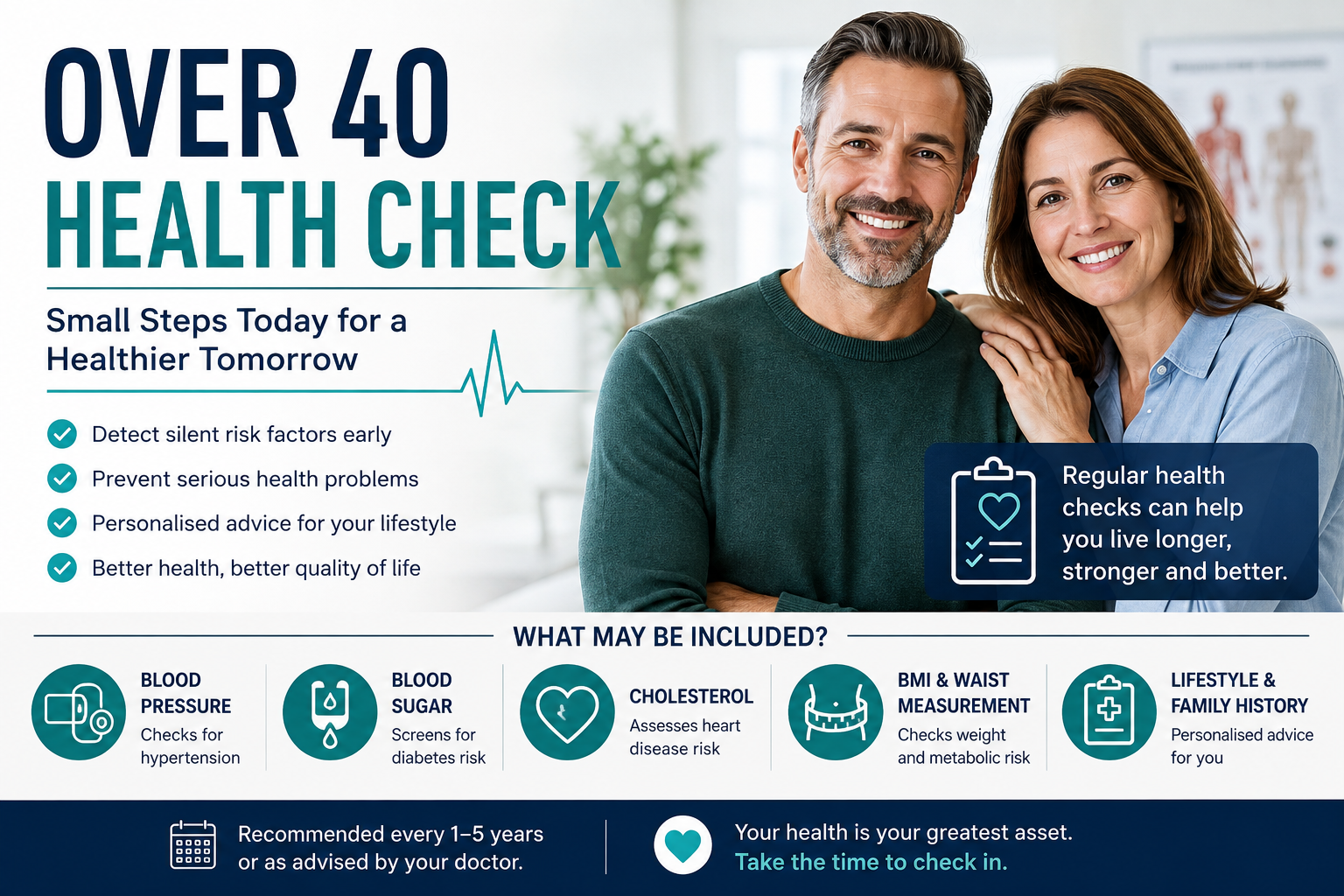
Turning 40 is a good time to review your long-term health. Conditions such as high blood pressure, type 2 diabetes and heart disease can develop without obvious symptoms. An over 40 health check can identify warning signs, estimate future risks and help you make practical changes before a problem becomes serious.
In England, the NHS Health Check is offered to eligible adults aged 40 to 74, usually once every five years. It assesses the risk of heart disease, stroke, kidney disease, type 2 diabetes and dementia. People who already have certain diagnosed conditions may receive different monitoring instead.
What Is Included in an Over 40 Health Check?
The appointment can vary by country, clinic and medical history. A typical check may begin with questions about smoking, alcohol use, physical activity, diet, family history and current medicines. These details help the healthcare professional understand factors that may affect your risk.
Your height and weight may be recorded to calculate body mass index, while your waist measurement can provide information about metabolic risk. Blood pressure is normally checked because hypertension often causes no noticeable symptoms.
A blood sample may be used to measure cholesterol. Depending on your risk factors or local programme, blood glucose testing may also be recommended to look for diabetes or prediabetes. The results are considered together to estimate your chance of developing cardiovascular disease.
The appointment also gives you an opportunity to discuss sleep, stress, mood, sexual health or persistent symptoms. A routine check is not a replacement for medical care when you feel unwell. Chest pain, unexplained weight loss, unusual bleeding, a changing lump or severe breathlessness should be assessed promptly.
Screening Tests to Discuss After 40
A general health check does not automatically include every screening test. The tests you need depend on your age, sex, family history, previous results and national guidance.
Cancer screening becomes increasingly important during midlife. In the United States, current guidance supports colorectal cancer screening for average-risk adults from age 45 to 75. Breast-screening guidance recommends mammograms every two years for average-risk women aged 40 to 74.
Cervical screening, lung cancer screening and prostate-related discussions follow different eligibility rules. Lung screening, for example, is usually limited to people with a significant smoking history. Your clinician can explain which programmes apply to you.
Preventive care may also include checking whether vaccinations are current, reviewing dental and eye care, and discussing bone health. The CDC describes preventive visits as a combination of screening tests, vaccination, counselling and routine medical or dental care.
How to Prepare for the Appointment
Before your over 40 health check, write down any medicines and supplements you take. Bring information about major illnesses in close relatives, especially early heart disease, stroke, diabetes or cancer. Wear clothing that makes it easy to measure your blood pressure and waist.
You may be told to avoid food before a blood test, but do not fast unless the clinic instructs you. Prepare questions about what your blood pressure and cholesterol numbers mean, whether follow-up testing is needed and which lifestyle change would make the greatest difference.
What Happens After the Check?
You should receive an explanation of your results and an individual plan. This may include improving your diet, increasing activity, reducing alcohol, stopping smoking, managing weight or arranging further tests. Some people may need medicines or follow-up, while others may be advised to maintain healthy habits.
Do not view the appointment as a pass-or-fail test. Its purpose is to create a useful baseline and highlight manageable risks. Small changes, followed consistently, can support better health as you age. Regular reviews can also improve your understanding of your numbers and make future health decisions easier.
Final Thoughts
An over 40 health check is a practical opportunity to detect silent risk factors and review the screenings that apply to you. Book an appointment with your doctor or local health service if you are due for a check, have a strong family history or are unsure about your screening schedule. Recommendations vary by country and personal risk, so follow advice from a qualified healthcare professional.